

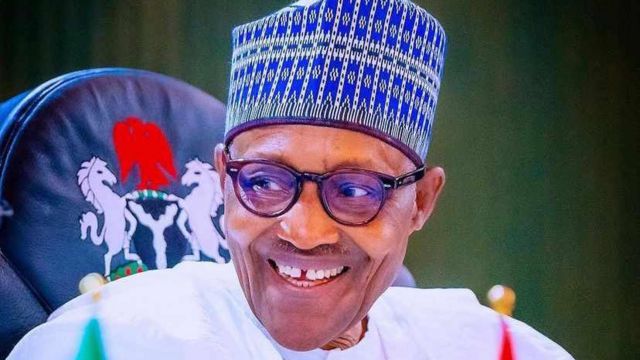
On May 29, 2015, at his inauguration at the Eagle Square in Abuja, Buhari got the attention of many Nigerians when he echoed the words of the French General and statesman Charles De Gaulle, “I belong to everyone and I belong to no one.” But his government was not believed to have reflected the golden words of De Gaulle: “I am a man who belongs to no-one and who belongs to everyone.”
Many thought he elevated the Fulani ethnic group far and above other tribes in the country. Former president Olusegun Obasanjo claimed Buhari fulanised the country. There were also nepotism dominating the political appointments he made.
But notwithstanding his weakness, Buhari was largely believed to be highly disciplined, and simple in his personae. He didn’t enrich himself with state’s resources.
Buhari was born on December 17, 1942, in Daura, Katsina State. He was the twenty third child of Mallam Hardo Adamu, a Fula chieftain originally from Dumurkul in Mai’Adua and Zulaihat. He was named after ninth-century Islamic scholar Muhammad al-Bukhari. Buhari was four years old when his father died, and Waziri Alhassan, the son of the Emir, Musa dan Nuhu became the guardian of Buhari’s mother and her six children, including Buhari.
Buhari had his primary education in Daura and Mai’Adua, and graduated in 1953. He was admitted into Katsina Middle School (later renamed to Katsina Provincial Secondary School), where he had his secondary education from 1956 to 1961.
He later got admission into the Nigerian College of Arts, Science, and Technology in Zaria, which would take him many years to complete. But he was advised by Mamman Daura, his nephew (but older than Buhari) to join the Nigerian military and pursue higher education there.
In 1962, at the age of 19, Buhari was one of 70 boys selected for recruitment into the Nigerian Military Training College (NMTC). He graduated in January 1963, at the age of 20 and was commissioned a second lieutenant and appointed Platoon Commander of the Second Infantry Battalion in Abeokuta
Following the 1966 Nigerian coup d’état that killed the Premier of Northern Nigeria Ahmadu Bello, Buhari, alongside other officers from Northern Nigeria, took part in the July counter-coup which ousted General Aguiyi Ironsi, replacing him with General Yakubu Gowon.
Buhari later became one of the leaders of the military coup of December 1983 that overthrew the elected President Shehu Shagari . The coup ended Nigeria’s short-lived Second Republic.
In August 1985, the government of Buhari was removed in another coup headed by Major General Ibrahim Babangida.
After spending time in House arrest after the coup, Buhari was released. He became a private Individual until the government of Abacha appointed him the chairman of the Petroleum Trust Fund.
In 1999, with the return of Democracy, Buhari joined partisan politics. He contested in every election since 2003 until he defeated an incumbent, President Goodluck Jonathan in 2015.
His government was rated poor on the fight against corruption, a major plank upon which he was elected, the economy nosedived and insecurity became pervasive. The succeeding government of President Bola Tinubu said they inherited a bad economy from him.
He has now left the scene after serving in the highest office twice.
About The Author


More Stories
Fashola weighs in on Lagos streets renaming, says state’s history must be preserved
Don’t put Nigeria at risk of expanded U.S. visa ban, Customs warns Nigerian travellers
U.S. raises bounty for wanted Venezuelan president, Nicolas Maduro, to $25m over alleged narcotics trafficking